
How to Build an AI Agent in 2026: A Practical Guide
Everyone wants an AI agent. Fewer people can tell you what one actually is, and even fewer have shipped one that survives contact with real users. This guide closes that gap. It walks through what an AI agent really is, how to build a working one, and the honest line between a weekend prototype and a system you can put in front of customers.
We build production AI agents for a living, so the advice here is what we would tell a smart colleague starting out, not a sales pitch dressed up as a tutorial.
What an AI agent actually is
An AI agent is not a chatbot. A chatbot answers. An agent acts. The difference is that an agent can decide what to do, use tools to do it, and keep going until the job is done.
Three capabilities separate an agent from a plain language model:
- Reasoning: it breaks a goal into steps instead of answering in one shot.
- Tools: it can call functions, APIs, databases, or other software to take real action.
- Memory: it remembers context across steps and, sometimes, across sessions.
A useful mental model: a language model is the brain, tools are the hands, and the agent loop is the nervous system that connects thinking to doing. If you want the deeper version of this distinction, we cover it in AI agents vs chatbots.
The anatomy of an agent
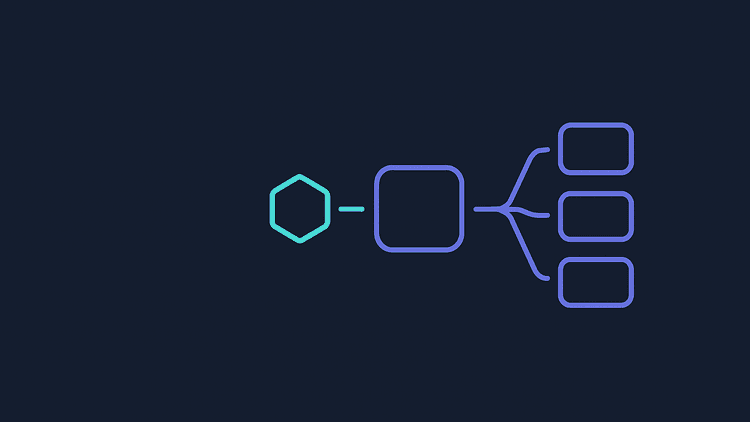
Every agent, from the simplest to the most complex, has the same four parts:
- A model. The reasoning engine (Claude, GPT, Gemini, or an open model). This is what plans and decides.
- Tools. The actions the agent can take: search the web, query a database, send an email, call your internal API.
- An agent loop. The cycle of think, act, observe, repeat, that runs until the goal is met or a limit is hit.
- Context and memory. The instructions, the current task state, and any history the agent needs to stay on track.
Get these four right and everything else is detail. Get them wrong and no amount of clever prompting will save you.
How to build your first agent (the fast path)
You do not need a research team to build a working agent. Here is the shortest honest path from zero to something that runs.
1. Start with one narrow job
The biggest mistake is building an agent that does everything. Pick one repetitive, well-defined task: triage incoming support tickets, draft first-pass replies, summarize a daily report, reconcile two spreadsheets. A narrow agent is easy to build, easy to trust, and easy to measure.
2. Choose your build level
- No-code and low-code (agent builders, workflow tools) get you a prototype in an afternoon. Perfect for testing the idea.
- Framework-based (an agent SDK plus a model API) gives you real control over the loop, the tools, and the guardrails. This is where most serious builds land.
Start no-code to prove the value, then rebuild on a framework once you know the agent earns its place.
3. Give it the right tools
An agent is only as capable as the tools you hand it. Cloudflare Wallets and x402 extend that toolset to payments made by agents. Connect the agent to the systems where the work actually happens. The cleanest way to do this in 2026 is the Model Context Protocol, an open standard for giving agents safe, structured access to your tools and data. We wrote a full walkthrough in Building an MCP server.
4. Write instructions like a manager, not a prompt engineer
Tell the agent its goal, its constraints, what good looks like, and when to stop or ask for help. Clear operating instructions beat clever prompt tricks every time.
5. Test it against reality
Run it on real examples, not the happy path you imagined. Watch where it guesses, loops, or acts on bad data. This is the step everyone skips and the reason most prototypes never ship.
The honest part: prototype vs production
A prototype that works in a demo is maybe 20% of the work. The other 80% is what turns an impressive demo into something you can trust with real customers and real money. That gap is made of:
- Reliability: what happens when a tool fails, a model hallucinates, or an input is malformed.
- Security and permissions: an agent with access to your systems is a new attack surface. It needs scoped permissions, audit logs, and hard limits on what it can do.
- Evaluation: you cannot improve what you do not measure. Production agents need a way to score their own output over time.
- Cost control: an agent in a loop can quietly burn a large API bill. You need budgets and circuit breakers.
- Compliance: if the agent touches personal or regulated data, KVKK, GDPR, and your industry rules apply from day one, not after launch.
None of this is a reason not to start. It is the reason to be honest about where you are. Building a prototype to learn is smart. Shipping that same prototype to customers without the other 80% is how AI ends up in the software graveyard.
When to build it yourself, and when to bring in help
Build it yourself when the job is internal, the stakes are low, and a mistake is cheap to catch. A support-draft assistant or an internal research agent is a great place to learn by doing.
Bring in an experienced team when the agent will touch customers, money, or regulated data, when it has to integrate deeply with your existing systems, or when reliability is the whole point. That is exactly the work we do: production-grade agents engineered around your systems, with the reliability, security, and evaluation that a demo skips. If that is where you are heading, our AI Studio is built for it, and how to evaluate an AI agent vendor will help you choose well, including if you never call us.
Start small, ship honestly
The best way to understand AI agents is to build one. Pick a narrow job, wire up a model and one or two tools, give it clear instructions, and test it against real inputs. You will learn more in a weekend than in a month of reading. Then, when the agent has to grow up and face real users, you will know exactly what the other 80% is worth.
Building something and want a second opinion on the architecture? Reach us at team@internative.net.
Keep reading
More articles from Blog.